







Introduction
Occultism, Theosophy, Espionage, Anarchy, Neutrality and Historical/Strategic Encounters
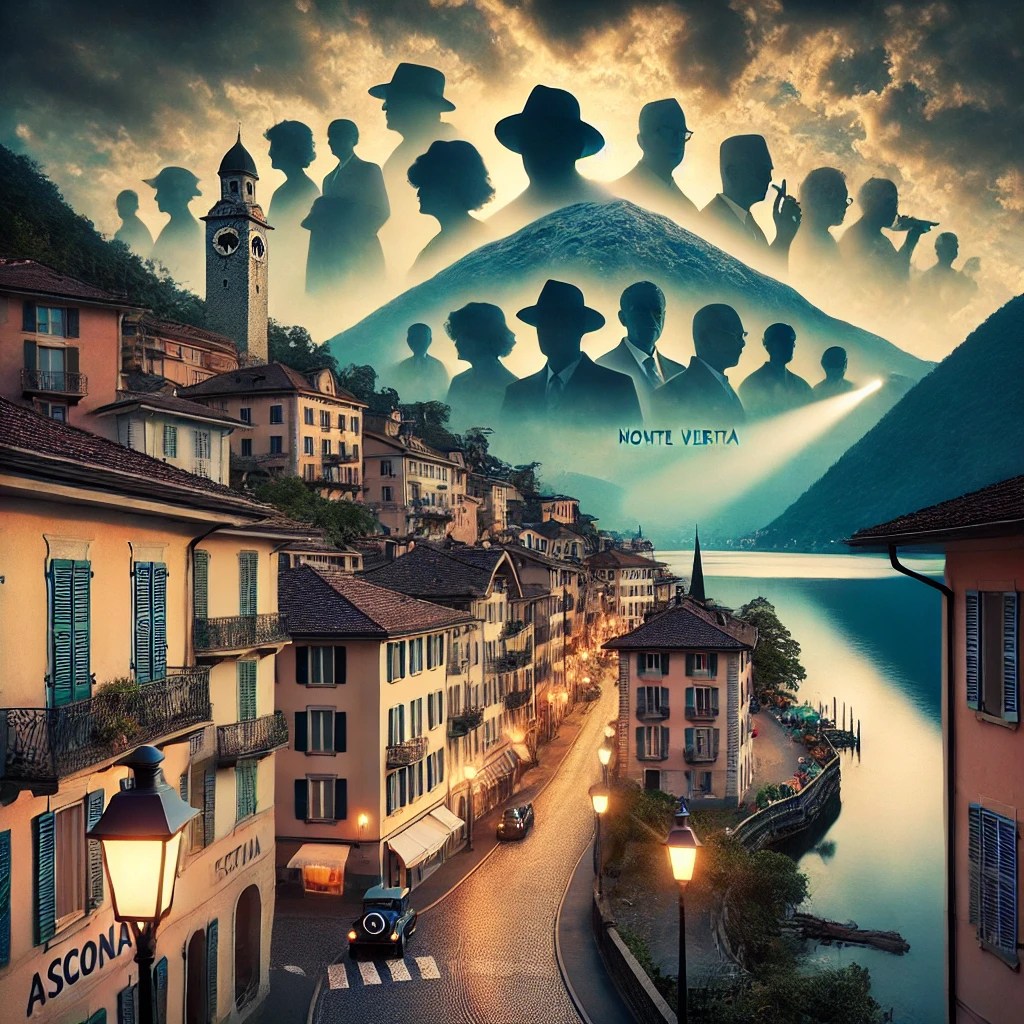
Many personalities connected with occultism, spirituality or the Theosophical Society in the narrow or broader sense have passed through or resided in Ascona. It is worth noting the presence of Russian, Polish and Jewish refugees between the Revolution , the First and Second World War. Bakunin and Kropotkin also were here for periods.
The neutral zone of Ascona should be seen as a refuge where opposing forces prepare their respective strategies and occasionally meet secretly or live a few metres apart in a strange ambivalence.
The network of ties between prominent figures is very dense in this area, particularly for our Theosophical sphere, who bought the land on which Monte Verità was to be built was Alfredo Pioda (1848 –1909, president of the lodge in Milan and one of the first to bring Theosophy to Italy) together with Franz Hartmann and Countess Wachmeister who, seeking to establish the Theosophical Lay Convent Fraternitas in 1889, laid the foundations for the theosophical substratum in the area. It should be noted that Hartmann played a key role in Adyar as chairman of the oversight committee for the Coulomb affair by advising a reluctant H.P.B. to fire Mr. and Mrs. Coulomb. On this occasion Hartmann is said to have contravened Koot Hoomi’s instructions.
Since the Fraternitas secular convent of Ascona’s Monte Verità did not come to fruition, the land was sold and Monte Verità was born as utopian/anarchic/vegetarian colony important for the 20th century avant-garde. Activity of the Theosophical Society continued in the region with the Locarno lodge, and by 1910 Switzerland was a section. Theosophists in the region gathered around the Balli, Franzoni and Pioda families while at Monte Verità there was experimentation inspired by theosophical ideals related to Lebensreform and freedom from social schemes, marriage for love, vegetarianism, anarchy and social-democratic ideals. The Monte Verità Utopic colony sought to be self-sufficient and consisted of wooden cottages that served as a sanatorium to detoxify from the oppressive social life of the time. Monte Verità became linked to the O.T.O. since Theodor Reuss, its founder, resided in Ascona (Karl Germer too). In 1917 with Rudolf Laban and Mary Wigmann an international congress of the O.T.O. was held. Commissioned by Crowley to found an O.T.O. lodge called Fraternitas Saturni, Gregor A. Gregorius (real name Eugen Grosche) also lived not far away in Verscio. German occultists and mystics found refuge in Switzerland to avoid Nazi persecution, as Hitler’s regime repressed esoteric activities and secret societies who were not part of his regime circle, considering them potentially subversive and incompatible with Nazi ideology. Later those who did not continue as members of the O.T.O. “spin-off” (if you consider it irregular masonry) were reintegrated into Swiss or German Masonic lodges.
The full story of Monte Verità here https://mediaguide.monteverita.org/en/the-history.
A nice gallery with explanations https://mediaguide.monteverita.org/en/personalities.
It should be noted that the Swiss ST library contains books by German authors that were destroyed in Germany and Austria, but are preserved here in Ascona.

According to O.T.O’s website, however, he is said to have been a founder and was given the title ‘Honorary Grand Master of the Sovereign Shrine’.
One of the founders of Monte Verità Gusto Gräser had studied in Vienna and came to Ascona. Franz Hartmann had experimented in Vienna and had come to Locarno. Rudolf Steiner had studied in Vienna and had also come to Locarno and Ascona. They met physically and/or spiritually at Monte Verità.
The physician and writer Franz Hartmann had known the multifaceted and esoteric Friedrich Eckstein in Vienna since the mid-1880s, he had already become acquainted with Theosophy and had met Blavatsky and Olcott in England in 1884; Hartmann found a kindred spirit here and introduced him, and later his wife Bertha Diener, to various yoga techniques as well as Theosophy. Eckstein, in turn, was a close friend of Sigmund Freud, who thus became acquainted with theosophy and yoga. Eckstein’s circle of acquaintances also included Rudolf Steiner, who was studying in Vienna at the time and who first came into intensive contact with Theosophy through this source. Eckstein, who was acquainted with numerous ‘greats’ of the turn of the century (19th/20th century), also passed on his theosophical ideas to Anton Bruckner , Hugo von Hofmannsthal , Karl Kraus , Adolf Loos , Robert Musil , Rainer Maria Rilke , Felix Salten , Arthur Schnitzler , Franz Werfel and Hugo Wolf among others. When Eckstein, authorised by a deed of foundation issued by Helena Blavatsky in 1886, founded a Viennese Theosophical Society, Hartmann was elected president. ….
Karl Kellner, a Viennese paper industrialist, came into contact with theosophy and yoga through Hartmann. … Hartmann, Kellner and Theodor Reuss worked from 1902 onwards to propagate a high degree Egyptian Freemasonry ritual, which the English occultist John Yarker had created by merging the Memphis and Misraim rites.
Eckstein was a friend of Freud and his pupil was Otto Gross. He also moved to Ascona.
Monte Verità ended in 1920 to move to Brazil. A nice anecdote : I met the former president of the Brazilian ST who had had contacts in his family with Ida Hoffmann. It is a small world and the theosophical world even less so.
It should also be noted that the Peace of Locarno near Ascona took place in ‘25: after the First World War, the restoration of a stable peace in Europe was a top priority. The Treaty of Versailles had laid the foundations for this process, however it was an imposed peace that the defeated countries did not accept. The schematic application of the principle of nationality, economic imbalances, the emergence of new balances of power and the birth of new states created a complex of tensions that constantly tested the system built at Versailles. In particular, the German question had to be resolved, fostering a rapprochement between victors and vanquished. This was the context for the Locarno Accords.
ERANOS MEETING IN ASCONA :
The Eranos meetings in Ascona take place from ’33 untill today not far from Monte Verità, on the lake, hosted by the noblewoman Olga Froebe Kaptein, who also resided at the Monte Verità for a while. Note a prologue of Eranos with the Kaptein, Alice Bailey partnership that lasted only 2 years. Eranos is more elitist as as can be deduced from the famous phrase of its patron Olga Froebe Kaptein about Mount Veritià : “only parasitic elements devoid of talent can be found there.” Eranos is an academic circle with the likes of C.G. Jung, Erich Neumann, Marie-Louise von Franz, James Hillman, Ira Progoff, Hayao Kawai and Wolfgang Giegerich; historians of religions Raffaele Pettazzoni, Gerardus van der Leeuw, Joseph Campbell, Mircea Eliade and Ernst Benz; historians of Christianity Ernesto Buonaiuti and Jean Daniélou; the scholars of the religions of the classical world Walter Friedrich Otto and Károly Kerényi; the orientalists Caroline Augusta Foley Rhys Davids, Paul Masson-Oursel, Heinrich Zimmer, Erwin Rousselle and Giuseppe Tucci; the Hebraists Leo Baeck, Martin Buber and Gershom Scholem; the theologians Paul Tillich, Hugo Rahner, Pierre-Jean de Menasce, Victor White and David L. Miller; the Islamists Louis Massignon, Henry Corbin and Toshihiko Izutsu; the Egyptologists Georges Hermann Nagel and Erik Hornung; the sinologists Paul Pelliot and Hellmut Wilhelm; the Gnostic scholars Henri-Charles Puech and Gilles Quispel; and the Egyptologists Georges Hermann Nagel and Erik Hornung; the sinologists Paul Pelliot and Hellmut Wilhelm; the Gnostic scholars Henri-Charles Puech and Gilles Quispel; the Zen Buddhist scholar Daisetz Teitarō Suzuki; the anthropologists Paul Radin, John Layard, Laurens van der Post and Gilbert Durand; the ethnologists Theodor-Wilhelm Danzel, Richard Thurnwald and Jean Servier; the archaeologists Charles Virolleaud, Vera Christina Chute Collum and Charles Picard; the philosophers Helmuth Plessner, Karl Löwith, Jean Brun and Pierre Hadot; the art historian Julius Baum; the literary critic Herbert Edward Read; physicists Friedrich Dessauer, Erwin Schrödinger, Hans Leisegang and Shmuel Sambursky; electronics engineer Max Knoll; mathematicians Andreas Speiser and Hermann Weyl; musicologists Victor Zuckerkandl and Hildemarie Streich; Chinese medicine scholar Manfred Porkert; and, with them, many, many more.
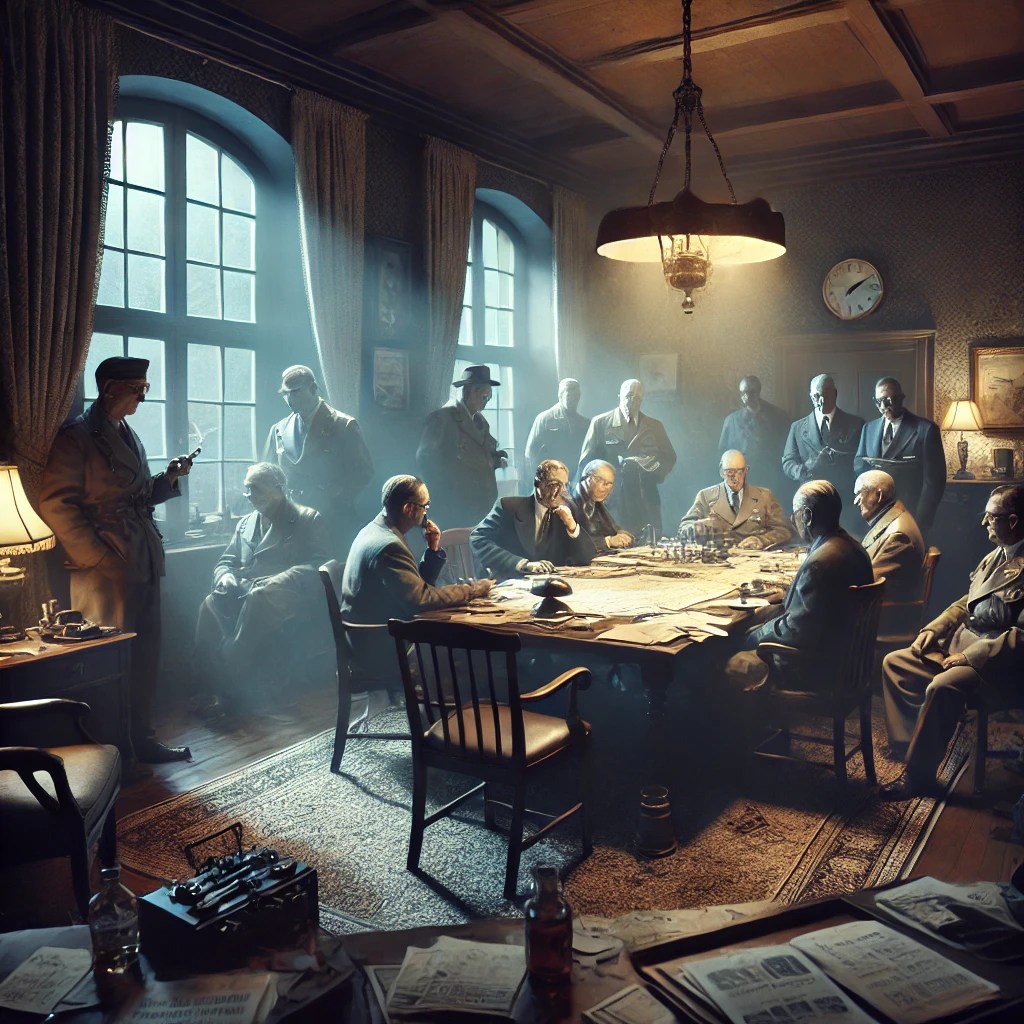
Present at Eranos is also Anne Bancroft, the prominent American spy involved in the attempted assassination of Hitler. Bancroft is lover of both Jung and Dulles. Note the strategic importance of Ascona due to Swiss neutrality, and the presence of Allen Welsh Dulles of the OSS (based in Bern). Note that Jung was a spy enlisted by Dulles and financed by Paul Mellon, one of America’s greatest business fortunes, derived from the Mellon Bank (also enlisted as a spy in the OSS). At the end of ‘45, Operation Sunrise was secretly carried out in Ascona in the house above the entrance to the hotel Ascona with the fresco of a crucifixion. Operation Sunrise was a secret meeting between the Italian and German generals and Dulles excluding the Russian presence. The overpowering Dulles and his brother Forster represent American anti-communist imperialism with the development of eugenics later exported to Nazi Germany. Consider the massive funding of the Nazi regime by Dulles himself through the very powerful law firm Sullivan & Cromwell, which represented American multinationals. Dulles in Bern is in charge of the OSS to spy on the Swiss government’s ambivalent cooperation with German industry. To be considered is the presence of the industry that built many Nazi weapons Oerlikon-Bührle in Ascona.
Another important figure in the search for peace was the noble Gebhard Werner von der schulenburg (1881-1958), who hosted statesmen and diplomats in the house next to the Hotel Ascona. Schulemburt was confidant of Mussolini’s Jewish mistress Margherita Sarfatti and friend of the Britain’s Prime Minister Chamberlain, trying to avoid II conflict and italian’s alliance with Hitler. Schulemburg’s brother, German ambassador attempted a coup d’état in 1944 and was executed by the Nazis.
Ascona’s artistic mother Marinanne Verefkin (1860 –1938) had relations with Roerich (1874 – 1947) who was for some time in the good graces of Roosevelt’s minister Herny Wallace (a Freemason). Klee, Jawlensky, Werefkin, Hans Richter, Italo Valenti, Ben Nicholson or Arthur Segal, the artistic personalities who enlivened the Ascona scene were almost all promoted by the Berlin Gallery “Der Sturm” whose owner together with her husband Hertwart Walden, Nell (1887 -1975) built in ’33 the house in which I now live with my wife. The Casa San Tommaso belonged to Lougi Pericle (1916-2001). In one way or another almost everyone came into contact with spirituality or Theosophy.
ARCHIVES AND FOUNDATIONS – ESOTERIC AND RELIGIOUS SCHOLARS
JUNGIAN ANALYTICAL PSYCHOLOGY
C.G. Jung: C.G. Jung Institute Zurich + ETH Library Zurich
https://junginstitut.ch | https://library.ethz.ch/en/information-and-services/digital-collections/jung-papers.html
Erich Neumann: Eranos Archive Ascona + Jung Institute Tel Aviv
https://www.eranosfoundation.org
Marie-Louise von Franz: Stiftung für Jung’sche Psychologie Zurich
https://www.junginstitut.ch
James Hillman: Opus Archives & Research Center, Santa Barbara
https://www.opusarchives.org
Ira Progoff: Rutgers University Special Collections
https://libguides.rutgers.edu/progoff
Hayao Kawai: Eranos Foundation Ascona
https://www.eranosfoundation.org
Wolfgang Giegerich: Eranos Foundation Ascona
https://www.eranosfoundation.org
HISTORY OF RELIGIONS
Raffaele Pettazzoni: Accademia dei Lincei Rome
https://www.lincei.it
Gerardus van der Leeuw: Rijksuniversiteit Groningen Library
https://www.rug.nl/library
Joseph Campbell: Joseph Campbell Foundation + NYPL Berg Collection
https://www.jcf.org | https://www.nypl.org/locations/nypl-research-centers/henry-w-and-albert-a-berg-collection-of-english-and-american-literature
Mircea Eliade: University of Chicago Regenstein Library
https://www.lib.uchicago.edu
Ernst Benz: Eranos Archive Ascona
https://www.eranosfoundation.org
HEBRAISTS AND THEOLOGIANS
Gershom Scholem: National Library of Israel
https://www.nli.org.il
Martin Buber: Buber Archive Hebrew University Jerusalem
http://buberarchive.org
Leo Baeck: Leo Baeck Institute New York
https://www.lbi.org
Paul Tillich: Tillich Archive Göttingen
https://tillich-gesellschaft.de
Hugo Rahner: Eranos Archive Ascona
https://www.eranosfoundation.org
ORIENTALISTS AND INDOLOGISTS
Giuseppe Tucci: Istituto Italiano per l’Africa e l’Oriente Rome
https://www.isiao.it
Heinrich Zimmer: Eranos Archive Ascona
https://www.eranosfoundation.org
Caroline Rhys Davids: Pali Text Society Oxford
https://palitextsociety.org
Paul Masson-Oursel: Bibliothèque Nationale Paris
https://www.bnf.fr
Erwin Rousselle: Eranos Archive Ascona
https://www.eranosfoundation.org
ISLAMISTS
Louis Massignon: Institut d’études iraniennes Sorbonne
https://www.ieiran.org
Henry Corbin: Eranos Archive Ascona
https://www.eranosfoundation.org
Toshihiko Izutsu: McGill Islamic Studies Library
https://www.mcgill.ca/islamicstudies
EGYPTOLOGISTS AND GNOSTIC SCHOLARS
Erik Hornung: Universität Basel Ägyptologie
https://aegyptologie.unibas.ch
Henri-Charles Puech: Bibliothèque de la Sorbonne
https://www.sorbonne.fr
Gilles Quispel: Brill Archive Leiden
https://brill.com
SINOLOGISTS AND ZEN
Daisetz Teitarō Suzuki: Suzuki Memorial Foundation Kyoto
https://global.sotozen-net.or.jp
Paul Pelliot: Bibliothèque Nationale Paris
https://www.bnf.fr
Hellmut Wilhelm: University of Washington East Asia Library
https://www.lib.washington.edu
Manfred Porkert: Sinologisches Seminar Zürich
https://www.sinologie.uzh.ch
TICINO CENTRAL HUB
ERANOS FOUNDATION ASCONA (90% listed scholars)
Via Moscia 34, 6611 Ascona
+41 91 785 40 40
info@eranosfoundation.org
https://www.eranosfoundation.org
DIGITAL RESOURCES
Eranos Jahrbücher Complete (1928-1988)
https://archive.org/details/eranosyearbooks
Jung Red Book Digital
https://www.e-rara.ch/jung_redbook
Luigi Pericle
The rediscovery of a master

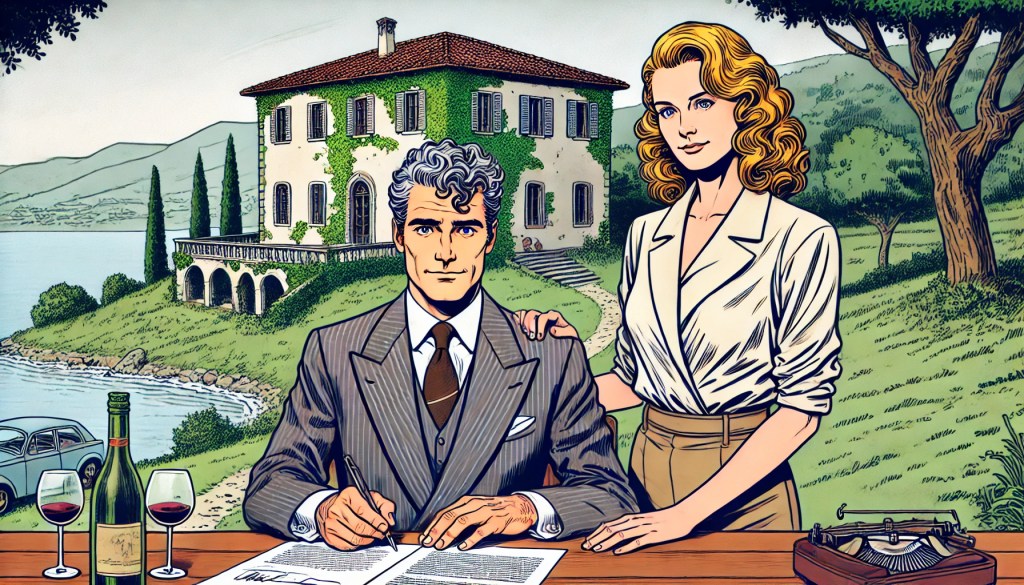
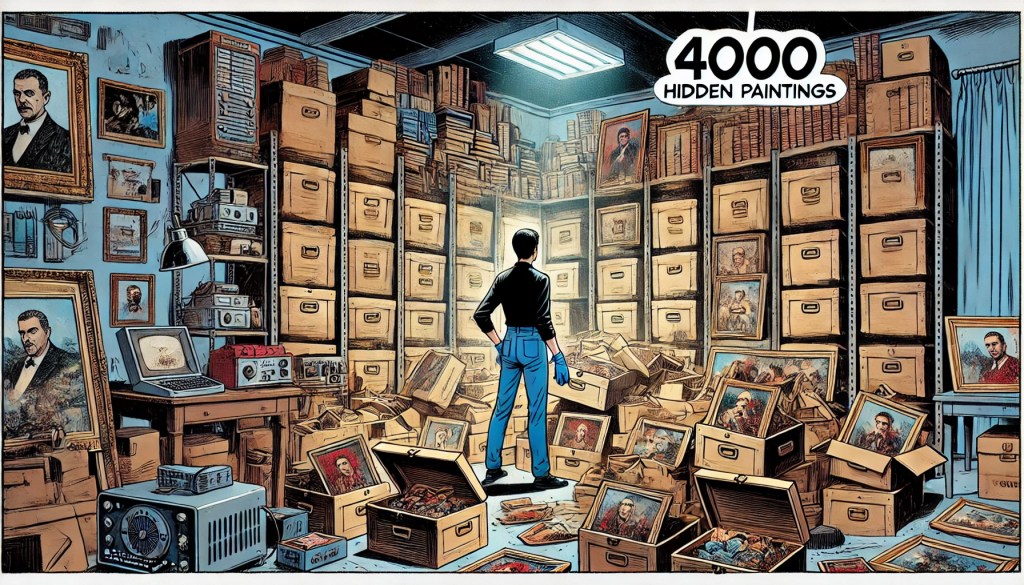

Not far from Monte Verità, a small villa from the 1930s, closed for years and swallowed up by brambles. It guarded an unimaginable secret. The story of a forgotten master. His art. His culture. For fifteen years, Greta and Andrea Biasca-Caroni have watched that house, more and more badly damaged with the passing of time, dreaming of being able to acquire it. Its garden bordered the property of their hotel in Ascona (Canton of Ticino, Switzerland), the Hotel Ascona, on Monte Verità (Hill of Truth). They wanted to visit those rooms, fascinated by the magnetism they emanated and by the memories of a silent man who had lived there intensely. Acquired by auction and reopened after a long period of forgetfulness, the house has revealed an extraordinary heritage. Hundreds of paintings and drawings meticulously kept in large wooden boxes crammed inside the rooms and basement. The high bookshelves still kept, rigorously aligned, volumes of philosophy, literature, art of past civilizations, from Egypt to the Far East, as well as scientific texts of theosophy, anthroposophy, astrology, ufology, which had nourished the knowledge and wisdom of the master, his vast preparation, which he then poured into the paintings and papers as an exercise of meditation, and into thousands of autograph documents, notebooks, drawings, theoretical and narrative texts. Bringing back to life paintings, Indian ink drawings, horoscopes, and manuscripts made it possible to return the figure of a leading author to history of art, and of culture in general; a protagonist of aesthetic research from the second post-war period onwards, whose human and intellectual life suddenly reemerged with all its value and complexity.
Biography
Painter, illustrator, scholar of theosophy and esoteric doctrines, Luigi Pericle (1916-2001) was a leading figure in the story of art in the second half of the twentieth century and he actively participated in contemporary cultural debates, embraced the approaches of informal European painting. He was admired by major international figures such as Sir Herbert Read, trustee of the Tate Gallery, the collector Peter G. Staechelin, and Martin Summer, director of Arthur Tooth & Sons, a London gallery which was fashionable during the swinging 60s. Pericle’s works were exhibited alongside those of masters such as Pablo Picasso, Karel Appel, Antoni Tàpies and Jean Dubuffet.
A tireless scholar of classical and oriental philosophies who was devoted to alternative spirituality, Pericle constantly strived to attain an absolute truth beyond contingency and materiality.
Luigi Pericle Giovannetti was born in Basel on 22 June 1916. His father, Pietro Giovannetti, was from Monterubbiano in the Italian region of Marche, while his mother, Eugénie Rosé, was of French origins. Pericle took up painting at a very young age, receiving his first commission when he was only twelve and, at the age of sixteen, he began art school studies, which he soon left disenchanted by the disciplines studied and in disagreement with the teaching methods. During his formative years, he was drawn to ancient and oriental philosophy, becoming well versed in Zen, Chinese and Japanese thinking, as well as those of ancient Egypt and Greece. These influences, different and at the same time united by a strive towards the pursuit of transcendence and inner meaning, created an artistic, spiritual and literary touchstone that guided him throughout his existential journey.
In 1947, he married Orsolina Klainguti, affectionately nicknamed Nini, a painter from the Canton of Grigioni who was to remain his inseparable companion in life. In the 1950s, the couple moved to Ascona, the small town that, since the 1920s, had hosted internationally recognized artists and had been known as a vibrant cultural center. The artist chose to live in Ascona to experience the mystical environment associated with the site of Monte Verità (literally, Mount Truth) and immerse himself in nature and tranquility. As a multifaceted man with a multitude of interests, Pericle is difficult to categorize: he was as much a professional artist as a gifted illustrator.
In 1951, he created Max, the marmot protagonist of a textless homonymous comic strip, which became very successful, not only in Europe but also in the United States and Japan. Pericle gained international fame from his work as an illustrator, which was published by Macmillan in New York and in newspapers including the Washington Post and the Herald Tribune, and appeared in the British satirical magazine Punch. In order to keep his two professions separate, the artist signed his illustrations under the surname Giovannetti. In 1958, he reached an artistic turning point, signaling a new phase in his creative production by destroying all but one of the figurative paintings works from his early years. He moved on to informal abstractionism and specialized in working techniques that characterized his works, the product of tireless research and experimentation.
In 1959, his paintings attracted the interest of Peter G. Staechelin, a well-known Basel-based collector, who regarde Pericle as a “virtuoso of seeing”. Staechelin acquired Pericle’s works and, in exchange, the collector gave the artist a small villa in Ascona, named by the painter Casa San Tomaso, which Pericle and Orsolina made their home for the rest of their lives. To make this purchase, Staechelin sold some Schiele and Klimt drawings to the Leopold Museum in Vienna, where they remained to this day. Pericle qualified the period from 1958 to 1965 as one of “radical change”: a time of unrelenting creative energy and enthusiasm, during which he created his most significant exhibitions.
In 1962, he met Martin Summers of the Arthur Tooth & Sons Gallery in London, where Pericle held two solo shows and two group shows, exhibiting with, among others, Karel Appel, Sam Francis, Asger Jorn, Antoni Tàpies, Jean Dubuffet, Jean-Paul Riopelle e Pablo Picasso. His paintings were bought by many famous collectors, including Brigitte Helm, Bennet Korn, Helmut Kindler, Lady Tate and Member of Parliament Sir Basil de Ferranti.
A solo exhibition was held in 1963 at the Castelnuovo Gallery in Ascona, owned by Trudi Neuburg-Coray, daughter of Han Coray, owner of the Dada Gallery in Zurich. Sir Herbert Read – art critic, co-founder of the Institute of Contemporary Art in London and artistic consultant to Peggy Guggenheim – visited Pericle’s studio in January 1965 and was profoundly impressed by his work. According to Read, Pericle was engaged in a “long pursuit of an absolute beauty” through abstract expression, a pure and metaphysical form, able to give back and communicating, thanks to the harmonies of line and color, an “inner essence” of things and their spiritual condition.
Hans Hess, museologist and curator at the York Art Gallery, organized a solo Pericle touring exhibition in 1965, which visited several British museums including York, Newcastle, Hull, Bristol, Cardiff and Leicester. After this successful period, Pericle chose to withdraw from the world of art sistem to absorb himself in his own research and the quietude of Ascona.
From the 1960s to the 1980s, Pericle produced an extensive series of paintings on canvas and masonite, Indian ink and drawings, in a creative and mystical state of inspiration that never abandoned him. This marked a period of isolation but also of rich productivity in the fields of literature, astrology, philosophy, anthroposophy and theosophy.
He archived horoscopes, ufology writings, notebooks full of Japanese quotations and ideograms, astronomical symbols and homeopathic recipes. He developed an urge to rid himself of material goods, which become so strong as to even compel him to sell his cherished Ferrari (which had previously belonged to Roberto Rossellini and Ingrid Bergman).
The artist and director Hans Richter visited Pericle in March 1970 and in a letter recounted: “I have heard quite a lot about an artist living near by in complete seclusion and have finally visited him. What I found was a very remarkable graphic and painting work, unlike anything I have seen before”. During this period, the creation of a monograph catalogue devoted to Pericle began; it would be published in 1979 by De Agostini. Meanwhile, the Max comic strip was still a best seller in New York and Japan. Beginning in 1980, Pericle’s curiosity and creative voracity then turned towards an in-depth study of the disciplines most dear to him and to the writing of Bis ans Ende der Zeiten (Until the End of Time), a subtly autobiographical and visionary novel, completed in 1996.
In it, he narrated the previous lives of his alter ego Odysseus and of his artistic and spiritual training; however, only a single chapter of the book would be published, under the title Amduat, in 1995. Pericle’s beloved wife Orsolina died in 1997, followed in 2001 by the artist himself, leaving no heirs. Their home then lay abandoned until December 2016, when it was purchased by hoteliers Andrea and Greta Biasca-Caroni, the neighbours, fascinated by the house’s glorious past which today reveals Pericle’s meticulous and systematic work of expressive research, an immense trove of his paintings and graphic works, fruit of the artist’s boundless culture and thirst for knowledge, a summa of universal thought catalogued by Pericle with monastic rigor.
After being rescued from oblivion, Luigi Pericle is now the focus of a large critical and philological reclamation. The extensive project to study, restore, conserve and catalogue his artistic heritage is being managed by the non-profit association Archivio Luigi Pericle, located in Ascona, as part of a coordinated process of re-evaluation and appreciation of Pericle’s legacy.
Works by Luigi Pericle are today kept in the collections of important collectors and museums.

A young Luigi Pericle
______________________________________________________________________________________
ASCONA-VIENNA

Teosofia
L’occultismo prosperava nella Vienna di fine secolo, quando Mahler aveva circa quarant’anni.
La Vienna di fine secolo era molto più di quanto a volte possa sembrare agli studiosi. Oltre ai tipi di figure e argomenti che tendono a rafforzare le aree di indagine “legittime” – filosofia, musica, architettura e psicoanalisi, ad esempio – a Vienna, come in gran parte del mondo di lingua tedesca, era presente un mondo occulto sotterraneo. Era un mondo in cui la teosofia, l’antroposofia, il pitagorismo, l’astrologia, la chiaroveggenza, la numerologia e altre forme di credenze occulte giocavano un ruolo, a volte importante, nella vita di alcune delle stesse figure che appaiono spesso negli scritti sulla Vienna di fine secolo.
Nel suo libro Hammer of the Gods, David Luhrssen include Mahler come membro della Società Teosofica di Vienna.
I membri originari della Società Teosofica di Vienna, alla sua fondazione nel 1887, provenivano da un circolo di intellettuali e bohémien che si erano incontrati continuamente dalla fine degli anni ’70 dell’Ottocento. Frederick Eckstein (1861-1939), il primo presidente della Società e in seguito una “eminenza grigia della vita culturale viennese”, aveva presieduto le discussioni a un tavolo in un ristorante vegetariano viennese per un decennio prima che la Società fosse formalmente organizzata nella capitale austriaca.
Il circolo intorno a Frederick Eckstein (1861-1939), che era stato il segretario personale di Anton Bruckner (1824-1896), era eterogeneo per origine etnica e politica. Comprendeva il poeta polacco Siegfried Lipiner (1856-1911); il maestro sinfonico ebreo Gustav Mahler; il compositore austriaco di canzoni d’arte tedesche Hugo Wolf (1860-1903); la femminista Rosa Mayreder, che discusse i ruoli di genere in termini di fusione alchemica degli opposti; Rudolf Steiner, che in seguito fondò il movimento delle scuole Waldorf insieme a un ramo mistico cristiano della Teosofia chiamato Antroposofia; e, occasionalmente, Victor Adler (1852-1918), fondatore del Partito socialdemocratico austriaco.
Tuttavia, nella Storia del Modernismo, Bernard Smith indica che Alma Mahler divenne una teosofa nel 1914, tre anni dopo la morte di Mahler, e che a lei è attribuita l’introduzione alla Teosofia di Johannes Itten, un pittore espressionista svizzero. Sebbene Mahler fosse interessato all’esoterismo, non è chiaro se Gustav Mahler stesso divenne un teosofo o fosse effettivamente un membro della Società Teosofica di Vienna.
Johannes Itten (1888-1967), che insegnò al Bauhaus dal 1919 al 1923, si interessò alla teosofia dopo aver incontrato la prima moglie di Walter Gropius, Alma Mahler, teosofa dal 1914. Lesse Thought Forms, Indian Philosophy e la cabbala di Besant e Leadbeater e sposò le idee della setta Mazdaznan che insisteva sulla meditazione e sul vegetarianismo.
Tuttavia, negli ultimi mesi prima della sua morte, Gustav e Alma condivisero l’interesse per la letteratura teosofica.
Mahler si sforzava di dimostrare il suo affetto ad Alma. La invitò alle cascate del Niagara e in generale fu più affascinante e attento di quanto non fosse mai stato prima. Inizialmente, almeno, questi ultimi mesi non furono offuscati, se non dai problemi con l’orchestra. La coppia iniziò a interessarsi alla teosofia e all’occulto e studiò i libri di C. W. Leadbeater e Annie Besant, quest’ultima ex collaboratrice di Helena Blavatsky, che erano le dernier cri in Europa e in America.
Nel suo libro, Gustav Mahler: Memories and Letters, Alma Mahler conferma l’interesse della famiglia Mahler per l’occulto.
Ho visto spesso una giovane donna americana che cercava di infondermi l’occulto. Mi ha prestato libri di Leadbeater e della signora Besant. Andavo sempre dritto da Mahler non appena se ne andava e ripetevo parola per parola tutto ciò che aveva detto. Era qualcosa di nuovo a quei tempi e lui era interessato. Iniziammo a chiudere gli occhi per vedere quali colori riuscivamo a vedere. Praticavamo questo e molti altri riti ordinati dagli occultisti così gelosamente che Anna Justine Mahler (Gucki) (1904-1988) fu scoperta una volta che camminava su e giù per la stanza con gli occhi chiusi. Quando le chiedemmo cosa stesse facendo, rispose: “Sto cercando il verde”.
John Covac ipotizza che i Mahler stessero leggendo il libro di Leadbeater e Besant, Thought Forms.
Nel caso di questo aneddoto, il libro in questione è molto probabilmente Thought Forms di Leadbeater e Besant, che discute i significati spirituali dei colori in termini teosofici entusiastici.
È più probabile che la famiglia Mahler abbia imparato a “vedere” il colore verde leggendo la sezione Percezione del capitolo intitolato Note su alcuni insegnamenti orali nel “terzo volume” (volume 5 nell’edizione Adyar) di La dottrina segreta pubblicato da Annie Besant nel 1897:
Cerca di immaginare qualcosa che trascende il tuo potere di pensiero, ad esempio, la natura dei Dhyân Chohans. Quindi rendi il cervello passivo e vai oltre; vedrai una luce bianca radiosa, simile all’argento, ma opalescente come la madreperla; poi delle onde di colore la attraverseranno, partendo dal viola più delicato, passando per le sfumature di verde bronzo fino all’indaco con riflessi metallici, e quel colore rimarrà. Se vedi questo, sei su un altro piano. Dovresti attraversare sette fasi.
Quando arriva un colore, guardalo e se non è buono, rifiutalo. Lascia che la tua attenzione sia attratta solo dal verde, dall’indaco e dal giallo. Questi sono buoni colori. Poiché gli occhi sono collegati al cervello, il colore che vedi più facilmente sarà il colore della personalità. Se vedi il rosso, è semplicemente fisiologico e deve essere ignorato. Il verde-bronzo è il Manas inferiore, il giallo-bronzo l’Antahkarana, l’indaco-bronzo è il Manas. Questi devono essere osservati e quando il giallo-bronzo si fonde con l’indaco ci si trova sul piano Manasico.
- Fin de siècle è francese e significa fine del secolo.
- Covach, John, Balzacian Mysticism, Palindromic Design and Heavenly Time in Berg’s Music, Encrypted Messages in Alban Berg’s Music, ed. Siglind Bruhn Routledge (New York & London: Garland Publishing, Inc., 1998).
- Luhrssen, David, Hammer of the Gods: The Thule Society and the Birth of Nazism (Washington, D.C., Potomac Books Inc., 2012) p.13.
- Staatliches Bauhaus, comunemente nota semplicemente come Bauhaus, era una scuola d’arte in Germania che combinava l’artigianato e le belle arti, ed era famosa per l’approccio al design che pubblicizzava e insegnava. Fu attiva dal 1919 al 1933. A quel tempo, il termine tedesco Bauhaus, letteralmente “casa della costruzione”, era inteso come “Scuola di costruzione”. Il Bauhaus fu fondato per la prima volta da Walter Gropius a Weimar.
- Il mazdaznan era una religione neo-zoroastriana che sosteneva che la Terra dovesse essere riportata a un giardino dove l’umanità potesse cooperare e conversare con Dio.
- Smith, Bernard Modernism’s History, (Sydney: University of New South Wales Press Ltd., 1998) pp.76-77.
- la moda più recente.
- Fischer, Jens Malte Gustav Mahler, trad. Stewart Spencer (Gran Bretagna: Yale University Press, 2011).
- Anna Justine Mahler (15 giugno 1904 – 3 giugno 1988) era la secondogenita del compositore Gustav Mahler e di sua moglie Alma Schindler. La chiamavano “Gucki” per via dei suoi grandi occhi azzurri (in tedesco “gucken” significa “sbirciare”).
- Mahler, Alma Gustav Mahler: Memories and Letters, ed. Donald Mitchell, (New York, Viking Press, 1969), p.188.
- Covach, John, Balzacian Mysticism, Palindromic Design and Heavenly Time in Berg’s Music, Encrypted Messages in Alban Berg’s Music, ed. Siglind Bruhn Routledge (New York & London: Garland Publishing, Inc., 1998) p.7.
- Blavatsky, Helena, Petrovna, La dottrina segreta, vol. V, (Adyar, Madras, India: The Theosophical Publishing House, Inc., 1971), 554.
 Ascona Retreat