
Swiss Theosophical Society
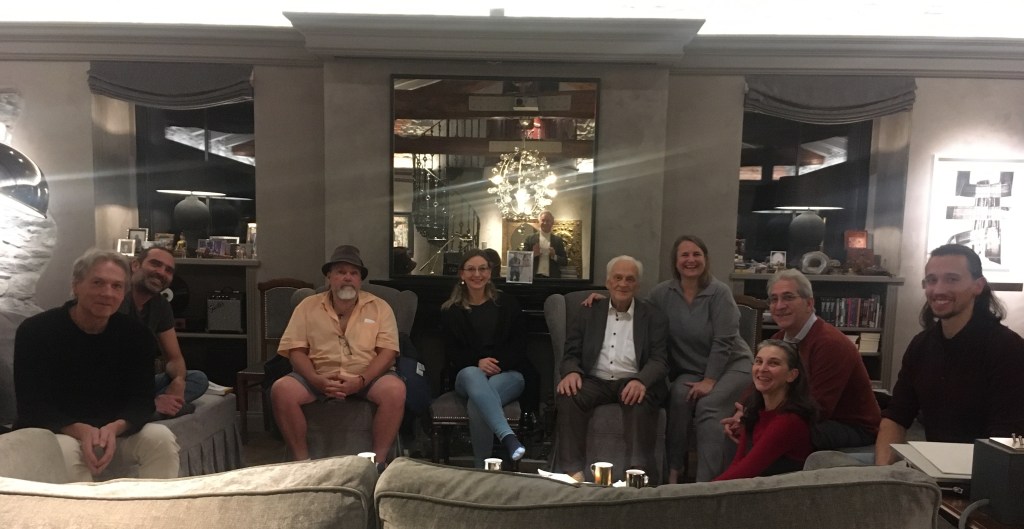
The Theosophical Society (T.S.) was founded in New York on 17 November 1875 and declared a Moral Entity in Madras (India) on 3 April 1905. Among its founders were H.P. Blavatsky (1831-1891) and H.S. Olcott (1832-1907), who were its pioneers. The Theosophical Society is a non-political and nonreligious international association, united in the principle of human brotherhood. Apart from this fundamental principle, the members of the Theosophical Society have no obligatory credo or faith: the association is based on the fundamental right to free research and the consequent respect for all ideas. The Research Centre of the Swiss Theosophical Society has its home at the Hotel Ascona, where it holds regular meetings and seminars. The Centre has a theosophical library that is open for consultation and hosts weekly meetings of the Fraternitas study group of Ascona every Tuesday. The aim of the Centre is to promote the study of theosophy, comparative spirituality, art and their expressions, as well as their role in culture. The PDF you see at the beginning of this text displays a nice presentation about our activities. Click here too.
. Luigi Pericle. The rediscovery of a master
The theosophical meetings are held beside the retreat center in a small villa from the 1930s, closed for years and swallowed up by brambles (now completely renovated). It guarded an unimaginable secret. The story of a forgotten theosophical master. His art. His culture. For fifteen years, Greta and Andrea Biasca-Caroni have watched that house, more and more badly damaged with the passing of time, dreaming of being able to acquire it. Its garden bordered the property of their hotel in Ascona (Canton of Ticino, Switzerland), the Hotel Ascona, on Monte Verità (Hill of Truth). They wanted to visit those rooms, fascinated by the magnetism they emanated and by the memories of a silent man who had lived there intensely. Acquired by auction and reopened after a long period of forgetfulness, the house has revealed an extraordinary heritage. Hundreds of paintings and drawings meticulously kept in large wooden boxes crammed inside the rooms and basement. The high bookshelves still kept, rigorously aligned, volumes of theososphy, esotericism, literature, art of past civilizations, from Egypt to the Far East, as well as scientific texts of theosophy, anthroposophy, astrology, ufology, which had nourished the knowledge and wisdom of the master, his vast preparation, which he then poured into the paintings and papers as an exercise of meditation, and into thousands of autograph documents, notebooks, drawings, theoretical and narrative texts. Bringing back to life paintings, Indian ink drawings, horoscopes, and manuscripts made it possible to return the figure of a leading author to history of art, and of culture in general; a protagonist of aesthetic research from the second post-war period onwards, whose human and intellectual life suddenly reemerged with all its value and complexity. MORE
. Monte Verità Foundation, Ascona, Switzerland
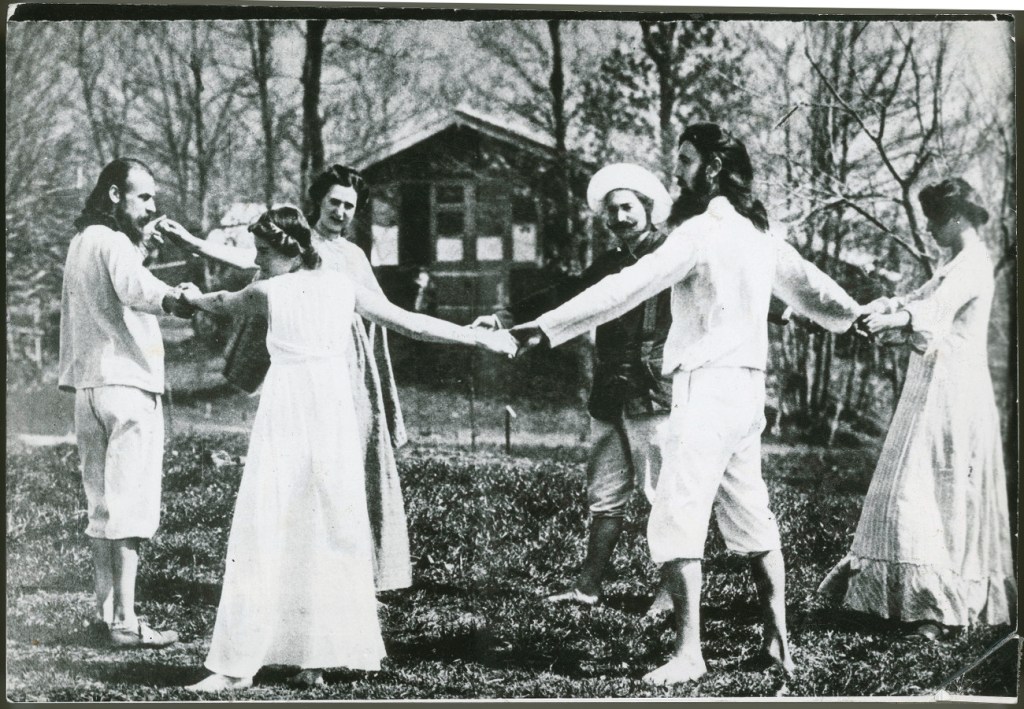
Monte Verità is a place of extraordinary cultural significance. Born from the vestiges of the plan for the lay theosophical convent Fraternitas (1889) developed by Alfredo Pioda (1848-1909), Franz Hartmann (1838-1912) and Constance Wachtmeister (1838-1910) – the last two close collaborators of H.P. Blavatsky (1831-1891) – from 1900 it became home to a Utopian community. During the course of the twentieth century few other places hosted such a large number of innovative figures; among them, for example, Rudolf von Laban, a leading figure in modern dance and one of the main exponents of “free dance”. Artists, writers, philosophers, dancers, all attracted by the desire to find like-minded people with whom they could share a path of artistic and spiritual research. The history and personalities who inhabited this place come alive in the various buildings that make up the museum complex: the Casa Anatta Museum, which houses Harald Szeemann’s historic exhibition “Monte Verità. Le mammelle della verità”; the Casa Selma air-light hut, built in 1904 by the first settlers, where visitors can see a film on the history of Monte Verità; the House of the Russians (Casa dei russi), now the seat of temporary exhibitions, whose name pays tribute to the presence of numerous Russian students at Monte Verità after 1910; the Elisarion Pavilion, which houses Elisàr von Kupffer’s work Il chiaro mondo dei beati (1920-1939).
. Ascona Museum of Modern Art, Switzerland
The collection was born in 1922, when many of the artists who had come to Ascona decided to
donate their work with the aim of creating the Ascona Museum of Modern Art. Among the most
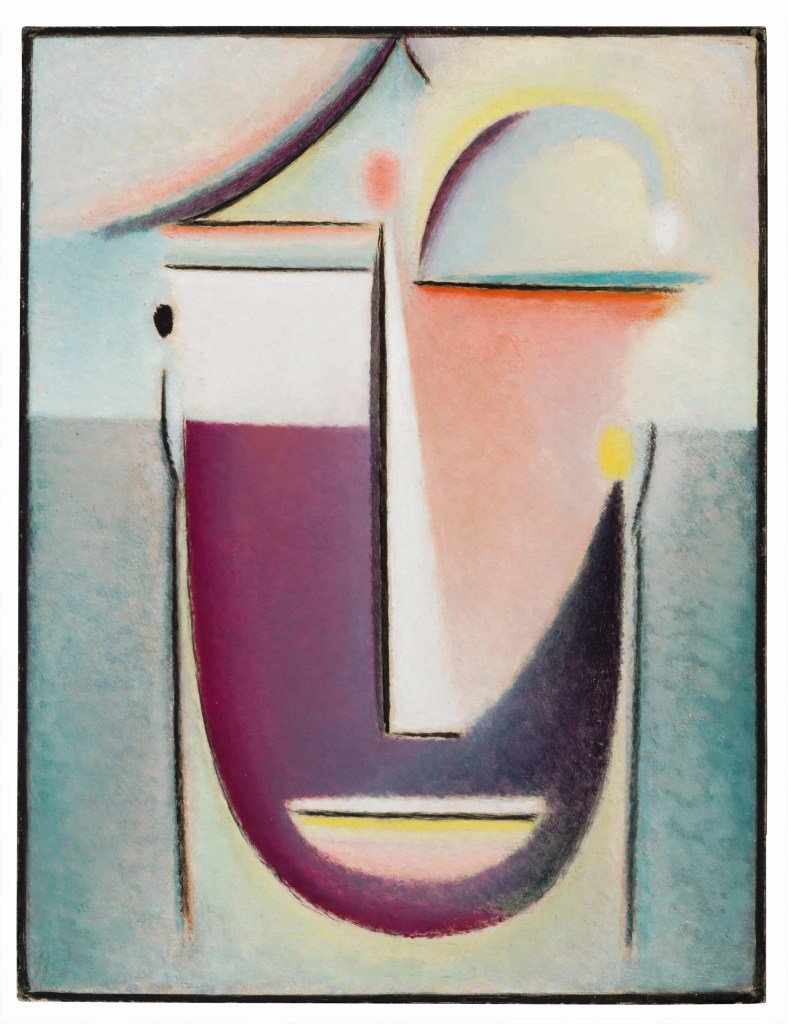
important works are those of Alexej von Jawlensky, Cuno Amiet and Paul Klee, gifts made to the Russian painter Marianne von Werefkin, as well as some of her works. The collection was gradually expanded over the following years. Particularly well represented is the work of Der Grosse Bär, the group formed in 1924 by Werefkin herself, with the Germans Walter Helbig and Otto Niemeyer-Holstein, the Swiss Albert Kohler and Ernst Frick, the Dutch artist Otto van Rees and the American Gordon Mallet McCouch. The collection also contains important works by Marcel Janco, Arthur Segal, César Domela and Hermann Hesse.
Among more recent acquisitions are various works by Luigi Pericle (with the creation of a Luigi Pericle Fund), Julius Bissier, Ben Nicholson and Italo Valenti, a tempera painting by Marino Marini, a polychrome head by Hermann Haller; and several important collections, like those of Carl Weidemeyer, Charlotte Bara and Anna Iduna Zehnder. The museum houses the collection of the Marianne Werefkin Foundation, which with around 90 paintings and 170 sketchbooks is the most important of this remarkable artist, a key figure of the avantgarde linked to the Blue Rider group (Der Blaue Reiter). Always in search of spiritualistic and theosophical ideals, which she had already begun to seek in the 1880s when she was still studying with Ilya Repin, Werefkin opened the way to a new aesthetics, now known above all thanks to the abstract works of Kandinsky and Klee.
. Botanical Gardens of the Brissago Islands, Switzerland
The two Brissago islands, on Lake Maggiore opposite the gulf of Ascona, are home to the only island botanical gardens in Switzerland, rich in subtropical species from all over the world. At the centre of the larger of the islands stands Villa Emden, the elegant neo-classical residence built in the 1930s by Max Emden. The Roman baths, the orangerie and the dock also date to the same period. The islands were owned by Baroness Antoniette di Saint-Léger (1856-1948), who had saved them from neglect and turned them into a home open to artists: famous painters, sculptors, composers and writers frequented the islands regularly until 1927. It is to her that we owe the foundation of the Botanical Gardens, which opened to the public on 2 April 1950. Antoinette Saint-Léger was a great friend of theosophers such as the lawyer Francesco Balli, the mayor of Locarno, the artist Filippo Franzoni and the sculptor Paolo Troubetzkoy, who came to theosophy thanks to his mother Ada Troubetzkoy (née Winans). Séances and concerts were held here, and the Baroness also possessed an extensive library and a rich collection of art works and objects. She was visited on the island by the painter Daniele Ranzoni and the Irish writer James Joyce, who found inspiration here for Ulysses, especially the Sirens and Circe episodes. Later Antoinette also frequented the painters Gordon McCouch and Marianne Werefkin, among others.
. Casorella Museum, Locarno, Switzerland
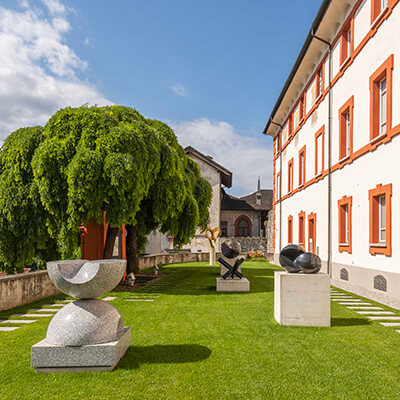
The Museo Casorella undertakes the task of enhancing the artistic heritage of Locarno, which counts about 4,500 works, including paintings, sculptures, and prints. Together with a series of sculptures, reliefs, canvases and tapestries by Jean Arp, the museum houses works by important 20thcentury artists such as Joseph Albers, Willi Baumeister, Michel Berkelaers, Camille Bryen, Sonia Delaunay, Piero Dorazio, Viking Eggeling, Max Ernst, Fritz Glarner, Walter Helbig, Johannes Itten, Marcel Janco, Lajos Kassák, Paul Klee, Alberto Magnelli, Piet Mondrian, Meret Oppenheim, Francis Picabia, Hans Richter, Arthur Segal, Sophie Täuber, Theo van Doesburg, Victor Vasarely and Alexej von Jawlensky.
The museum also houses a series of paintings by Filippo Franzoni (1857-1911), the renowned artist from Locarno who frequented Monte Verità, studied theosophy and became a follower of spiritism. Around the turn of the 20th century. the works of this fine artist paved the way to modernism in the Ticino canton, too, thanks largely to a series of memorable landscapes. Displayed in the museum garden are works by Max Bill (1908-1994). A full-fledged sculpture garden, illustrating the results of the formal research based on rigorous geometrical principles adopted by the artist, a Swiss architect and designer who had studied at the Bauhaus in Dessau with teachers such as Josef Albers (he, too, a frequent visitor to Monte Verità), Wassily Kandinsky and Paul Klee.

. San Materno Theatre, Ascona, Switzerland
A brief stay by the dancer Isadora Duncan and Émile Jaques-Dalcroze, founder of the
eurhythmics method now taught in many dance schools all over the world, gave origin to the history of artistic experimentation at Monte Verità that developed with the summer school run by Rudolf von Laban. The mime dancer Charlotte Bara (1900-1987), who frequented the Monte Verità circle, had the present-day San Materno Theatre built in Ascona by Carl Weidemeyer (1928). A small masterpiece of architecture, the theatre became known not only for Gothic-Egyptian sacred dance but also for the numerous mime and theatre productions, concerts and conferences. Bara had it built on the site of an old Romanesque church, because she loved to dance in the space of the ancient apse. The San Materno Theatre is the first and best-known work in Ascona by the architect Weidemeyer, an unusually versatile artist who acted as an important link between Mitteleuropean and Mediterranean culture. Commissioned for Charlotte Bara by her father Paul Bachrach, the building was intended to be a “temple for artistic expression in the spirit of the dance school” and is the first modern chamber theatre in Switzerland.

. Eranos Foundation, Ascona, Switzerland
At the end of the 1920s, at Ascona-Moscia on the shore of Lake Maggiore, Olga Fröbe-Kapteyn (1881-1962) first developed her plan to create a “place of encounter and experience”, a “free space for the spirit” in which Oriental and Western philosophies could come together and enter into dialogue. The Eranos conferences began in 1933, and from the start the activities were planned and coordinated by Olga Fröbe-Kapteyn, assisted by the so-called “Eranos Circle” (Eranos-Kreis) or “Eranos Community” (Eranos-Gemenischaft): a small group of scholars who, at least in the first twenty years, were inspired by the extraordinary figure of C.G. Jung (1865-1961). During the Second World War, Eranos was far ahead of its time in its focus on interdisciplinary study, making a remarkable contribution to the intellectual history of Europe. At Eranos, which has gathered together some of the most influential thinkers of the 20th and 21st centuries, various figures belonging to the world of art have also had the opportunity to meet and discuss their ideas: Sir Herbert Read (1893-1968) – who appreciated and supported the work of Luigi Pericle – who was a speaker at many Tagungen from 1952 to 1964 on the theme of art and creativity; in 1968 the Dutch artist Paul Citroen (1896-1983), who focused his attention on the role of the painter in relation to art; and in 1971, René Huyghe (1906-1997), who spoke about the evolution of the artist in Rembrandt, Vermeer and Delacroix.
. Marguerite Arp Foundation, Locarno, Switzerland
Jean Arp (1886-1966), who in 1911 had published Runes and bizarre writings, would be an assiduous frequenter of the circle of theosophers at Monte Verità. In his art Dadaism turned into Surrealism, to the extent that he stated: “The law of chance, which embraces all laws but which is ultimately unfathomable like the first cause from which all life arises, can only be experienced through complete devotion to the unconscious.” Arp studied Jakob Böhme, Meister Eckhart and Lao Tse, he was interested in Oriental mysticism and frequented theosophers and esotericists like René Adolphe Schwaller de Lubicz (1887- 1961), who also taught Miró.
In February 1959 Jean Arp and Marguerite Hagenbach purchased an estate in Locarno-Solduno called Ronco dei Fiori: covering an area of one acre, it was formed of an old Ticino house, a large garden and a vineyard. After renovation work, the couple moved to the house in May 1960. On the first floor Arp set up his studio, although he also had a sculpture workshop in Locarno, in the complex created by Remo Rossi, where he made his last sculptural works. Over time the beautiful garden was enriched with the sculptures executed by Arp in Ticino, and in 1965 he announced his intention to create “a sort of gallery” at Ronco dei Fiori to display at least part of the collection of works built up with his wife Marguerite. The plan was then formalized in the statute of the Foundation, and around fifty years later, in the summer of 2014, became reality with the creation of an art deposit and an exhibition space. The art archive of the Marguerite Arp Foundation, located in the atelier, houses a remarkable collection of documents, photos, rare editions and specialist texts on Jean Arp, Sophie Taeuber-Arp, Marguerite Hagenbach and the avantgardes of the 20th century.
The library of Jean Arp and Marguerite Arp-Hagenbach, owned by the Foundation, contains around 7,000 titles, and includes the first editions of the poetic works of Jean Arp, as well as numerous rare works and collections of important modern art journals that provide a highly specialized viewpoint on 20th-century art. The Marguerite Arp Foundation also houses an important archive of poetry and prose texts by Jean Arp, collections of the correspondence of Arp, Sophie Taeuber-Arp and Marguerite Hagenbach with artists, gallery-owners and collectors, as well as notebooks, photos and other documents.

. Remo Rossi Foundation, Locarno, Switzerland
The sculptor Remo Rossi (1909-1982) was among the best-known representatives of the local
tradition, but also and above all a leading exponent of the most modern international art currents. Thanks to his role on the Federal Commission for Fine Arts (after becoming a member in 1948, he served as vice-president from 1954 and president from 1969 to 1979), and his position as Commissioner for Switzerland at the Venice Biennale (from 1962 to 1972), Rossi was able to meet and establish friendships with many exponents of the new art scene. During his long time with the Federal Commission, he worked to foster the work of young artists and to assist them through special grants. The birth of the ateliers in Saleggi, Locarno, came about thanks to his friendship with Jean Arp, for whom he wished to provide a space to work. The idea was to form a small art community in which sculptors, painters, engravers, ceramists and artists of all types could carry out their work in peace. The complex of ateliers thus offered many artists the chance to work in a suitable environment, when necessary using the material and the contribution of the assistants employed by Remo Rossi. The atelier project attracted artists to the Locarno area, and also brought about wider knowledge of their works. When Marguerite and Jean Arp donated an important collection of works to the city of Locarno, plans began for a new Municipal Museum of Modern Art, which opened on 10 April 1965 at the Castello Visconteo, now home to the previously mentioned Casorella Museum.
. Hermann Hesse Museum, Montagnola, Switzerland
The Hermann Hesse Museum was established in the rooms of the Torre Camuzzi, in Montagnola,
Switzerland in 1997. This ancient tower is part of the picturesque Casa Camuzzi where Hermann Hesse lived between 1919 and 1931. From his apartment, he had a marvellous view overlooking the lake of Lugano.
A permanent exhibition brings back to life Hesse’s 40 years in Montagnola. The many personal belongings, photos, books and watercolour paintings show not only the writer, but also Hesse as a private person. The focus on certain themes, such as India or the writing of The Glass Bead Game, provide the opportunity to follow the writer’s creative process. The Hermann Hesse Museum in Montagnola offers a variety of activities. Temporary exhibitions, lectures, concerts, films, walking-tours, and weekly readings in two languages make the Museum a lively meeting point for visitors from all over the world
I would like to stay at, or I have questions about “The Theosophy Ascona Retreat”
+41 (0) 79 621 23 43
Ascona Theosophy Retreat
Hosted by Hotel Ascona
Via Signore in Croce 1
6612 Ascona
Switzerland
 Ascona Retreat